

A recent New York Times story described a dinner party where fourteen AI agents talked among themselves while their owners ate.
It’s an interesting experiment. What caught my attention was where that idea could lead.
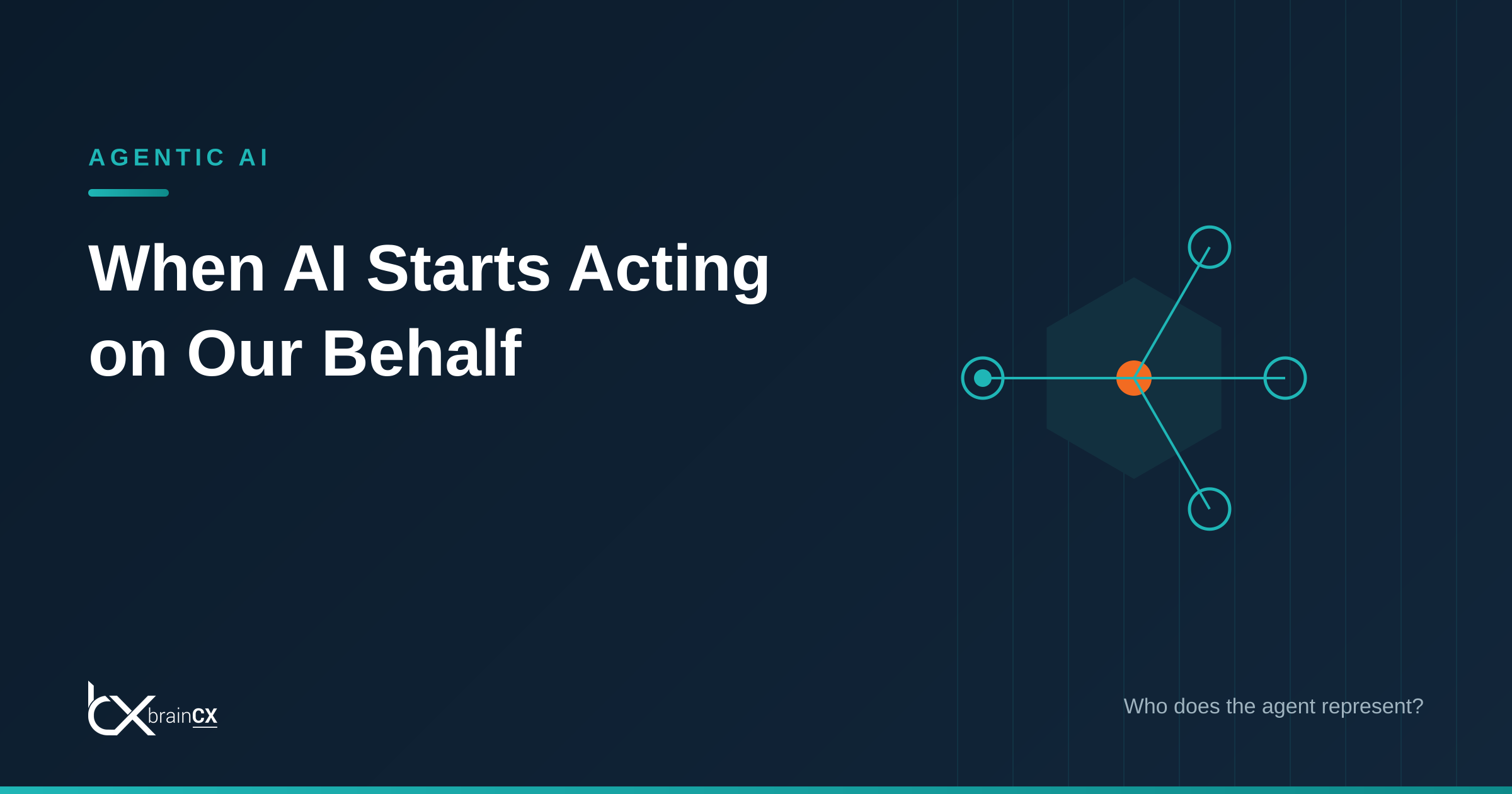
We’ve spent the last few years getting comfortable talking to AI. What happens when our AI starts talking to another AI on our behalf?
When those conversations involve changing a flight, booking an appointment, accessing personal information, or spending money, the questions become consequential.
Who does the agent represent? What can it do? Who is responsible for the outcome?
After more than three decades in customer experience, those are the questions I find myself thinking about most.
The customer’s request is usually the easy part
My experience includes leading global customer-service expansion for Apple, CX operations for Spirit Airlines, and years in BPO leadership.
Across those environments, I’ve seen how much work sits behind a simple request.
“Move my flight to tomorrow afternoon, but keep my aisle seat.”
The passenger knows what they want. Completing that request requires an understanding of availability, fare rules, costs, permissions, and exceptions.
An experienced employee knows how to connect those pieces. They also know when to stop and ask another question.
As AI takes on more of that work, the quality of the understanding underneath the conversation becomes increasingly important.
The interface is changing
For years, customers have learned how to navigate the way a business organizes itself.
Choose a department. Search a website. Complete a form. Explain the issue again after a transfer.
Interactive AI offers a different approach. A person can describe what they need while the digital experience responds, brings forward relevant information, and helps them move through the task.
That shifts some of the effort away from the customer.
It also raises expectations. If an experience understands what I’m asking, I expect it to understand what happens next.
A polished conversation can expose a disconnected operation very quickly.
Then comes AI talking to AI
Agent-to-agent interaction, often called A2A, takes this a step further.
Imagine a personal AI working through that flight change with the airline’s AI. It could review the available options and return to the passenger when a decision requires approval.
But permission to search is different from permission to purchase. Access to a record doesn’t automatically include permission to share it.
When one agent passes work to another, the customer’s original instructions and limits need to remain intact.
Businesses will need to decide how that authority is established, how exceptions are handled, and how a person can intervene.
These are operating decisions with technical requirements behind them.
The knowledge underneath matters
Every operation has people others turn to for the difficult questions.
They recognize exceptions. They understand the difference between what a policy says and how to apply it. They know when an issue needs another person’s judgment.
Capturing that understanding is a substantial part of the work ahead.
It is shaping our development at BrainCX, including One Brain, the shared intelligence layer we’re developing around business context and the knowledge of experienced people.
The aim is a more consistent understanding across interactive experiences today, with agent-to-agent interactions as a further direction of development.
Connecting systems is part of that work. Understanding the business well enough to act appropriately is another.
Trust needs to be built into the work
BrainCX completed SOC 2 Type II this month and filed two provisional patent applications relating to elements of the technology and architecture we’re developing.
Those are meaningful milestones within a broader effort to build with security and accountability from the beginning.
SOC 2 does not resolve every question about autonomous agents. Businesses still need clear decisions about identity, consent, access, and responsibility.
The more capable these systems become, the more those decisions matter.
We should be able to explain what an agent was asked to do, what it was allowed to do, and what actually happened.
The dinner-party experiment gives us something interesting to discuss.
The next stage asks a harder question: what must businesses put in place before we trust these systems to act on our behalf?